
Is My Commercial Wiring Up to Code in Salem?
It depends — and the answer hinges on a few key factors: whether your building has been altered, whether your business type has changed, and whether anyone has touched the electrical systems since the last inspection. Oregon law gives existing commercial buildings more breathing room than most owners realize. But that protection has limits, and knowing where those limits fall could save you from a very expensive surprise.
Most Salem business owners never think about electrical code compliance until something goes wrong. A breaker trips during peak hours. An insurance renewal comes back with a flag. A property sale stalls over something that was hiding in the panel room for years. By the time the question surfaces, it’s already a problem.
This post covers what “up to code” actually means for commercial buildings in Oregon, how Salem’s permitting process works, what code violations look like in real buildings, and when it’s time to call a licensed electrician.
What Does Electrical Code Compliance Actually Mean for a Commercial Building in Salem, Oregon?
Here’s what most business owners don’t know: Oregon does not require your existing commercial wiring to be brought up to the current electrical codes just because those codes changed.
State law is clear on this point. Wiring in an existing Oregon building that met the electrical safety standards in effect when it was installed is not considered a violation of today’s code. If it was legal when it went in, it is generally still legal now.
That protection disappears the moment something changes. Expand your square footage. Convert a storage room into office space. Add a commercial kitchen. Bring in equipment that pulls more load than your electrical panels were designed to handle. Any of those changes triggers an upgrade requirement, and the work must meet the current Oregon Electrical Specialty Code (OESC).
The current OESC took effect October 1, 2023. It is built on the 2023 National Electrical Code (NEC) with Oregon-specific amendments layered on top. Any new electrical installation, permitted alteration, or addition to your system must meet this version.
What Triggers an Electrical Code Compliance Requirement for Commercial Work in Salem?
Not every change to your building forces a full overhaul. But certain changes always require a permit and an inspection. In Salem, any electrical work performed in a commercial building requires a permit. Only a licensed electrician holding the proper Oregon contractor credentials can pull that permit. No exceptions.
A few scenarios that come up regularly:
- New equipment or added circuits: Adding commercial kitchen equipment, expanding a server room, or increasing HVAC capacity all require new circuits. Every new electrical installation requires a permit and must meet current electrical codes.
- Change of occupancy: Converting a retail space to a restaurant, a warehouse to office use, or a single-tenant building to multi-tenant occupancy brings the electrical systems into current code review.
- Renovation or interior alteration: Oregon building code is specific here. Additions, alterations, renovations, and repairs to existing commercial buildings must follow current electrical and energy code requirements for the portions affected. The unaltered portions are generally exempt — but only if they remain completely untouched.
- Panel replacement or service upgrade: Replacing electrical panels or increasing your building’s service amperage is always a permitted activity in Oregon, with no exceptions for scope or project size.
In Salem, commercial electrical permit applications can be submitted online through the City of Salem’s PAC Portal or in person at the Permit Application Center, City Hall, 555 Liberty St. SE, Room 320.
What Are the Most Common Electrical Code Violations Found in Commercial Buildings in Salem?
You don’t have to have done anything wrong for your building to have problems. Code violations build up over time through previous tenants, unlicensed repairs, and equipment loads that eventually outgrew the original system design. Our licensed commercial electricians in Salem encounter the same categories of issues across buildings of every age and size.
Open splices top the list. This is when two or more wires are connected without a proper junction box enclosing the connection. It happens when someone handles a repair without the right training or tools. The National Electrical Code prohibits open splices because of the arcing, fire, and shock hazards they create. They hide in drop ceilings, above storage shelving, and inside mechanical rooms where no one looks for years.
Overloaded circuits are a close second. Extension cords and power strips get used as permanent solutions in offices and back-of-house spaces. Over time, the load climbs well past what the wiring and circuit breakers were rated to carry. Overloaded circuits overheat. Overheating causes arcing. Arcing causes fires. This is one of the most consistently cited code violations in commercial buildings across Oregon.
Electrical panels with labeling problems look like a minor issue until they aren’t. Oregon and NEC standards require every breaker to be clearly labeled with an accurate description of what it controls. Our commercial electricians in Salem routinely find panels with missing labels, labels that no longer match the circuits they describe, or handwritten notes so faded they’re unreadable. Fire inspectors require accurate panel schedules before approving occupancy.
Grounding and bonding failures are common in older Salem commercial buildings that have been renovated more than once. Each renovation adds a layer of work. Not every contractor who touches a building over twenty years correctly handles bonding. Improper bonding means metal components capable of becoming energized are not held at the same electrical potential — which is the condition that leads to electrocution.
Two more code violations that appear on nearly every older building inspection:
- Inaccessible or missing GFCI protection: Ground-fault circuit interrupters must be installed where they can actually be reached and tested. Placing them behind heavy commercial equipment or in locations that require moving fixtures to access them is a violation regardless of whether the device itself was correctly installed.
- Unprotected wiring in mechanical and storage areas: Cables running along walls, across floors, or through crawl spaces must be enclosed in conduit or a protective raceway. Without that physical barrier, foot traffic, equipment movement, and cleaning all become threats to wire insulation — and to electrical safety.
Does Your Salem Commercial Building Need Surge Protection and Updated Circuit Breakers?
Two items that come up in commercial electrical inspections more often than most owners expect: surge protection and circuit breakers that no longer match the load they’re protecting.
Surge protection for commercial buildings guards against voltage spikes that can damage equipment, corrupt data, and shorten the lifespan of every device connected to the building’s electrical systems. The 2020 NEC update introduced surge protection requirements for certain commercial occupancies that were not previously covered. If your building hasn’t been inspected since that code cycle, it may be missing required surge protection at the service entrance or downstream panels.
Breaker sizing is a separate but related problem. Install a circuit breaker that’s too large for the wire it’s protecting and you’ve created a fire risk — the breaker won’t trip when the wire overheats. Install one that’s too small and it trips constantly, disrupting operations. Mismatched circuit breakers are common in commercial buildings where multiple contractors have worked over the years, each adding circuits without a full system review. This is a code violation and an electrical safety issue that a licensed electrician can identify and correct during an inspection.
How Does Oregon’s Current Building Code Affect Salem Commercial Electrical Systems?
The 2023 Oregon Electrical Specialty Code is the active standard for all commercial electrical work in Salem. Any permitted project reviewed after October 1, 2023 was evaluated against this version.
Oregon also updated its commercial energy efficiency requirements. As of July 1, 2025, all commercial permits in Oregon must follow the 2025 Oregon Energy Efficiency Specialty Code, which applies stricter standards than what preceded it. This affects lighting controls, motor efficiency requirements, and electrical load calculations for new and renovated commercial spaces.
For Salem business owners, this means a commercial renovation permitted today is held to tighter standards than the same project two years ago. Oregon also added a requirement effective January 1, 2026: microgrid equipment and distribution installed on the customer side of the service point must comply with current OESC standards. If your building has or is planning battery storage, backup generation, or any distributed energy system, this change applies to you.
Does a Passed Inspection Mean a Salem Commercial Building Is Still Code-Compliant Today?
Not necessarily. A permit and a passed inspection confirm that specific work was reviewed and approved at a specific moment in time. They say nothing about what happened afterward.
Commercial buildings change hands. Tenants come and go. Vendors install equipment and tap into electrical panels without pulling permits. Someone opens the breaker box to address a tripping circuit breaker and inadvertently creates a bonding problem in the process. None of that shows up in the permit history. All of it shows up when a licensed electrician physically inspects the system.
The permit record tells you what was approved. A current inspection tells you what you actually have.
What Should Salem Business Owners Do Before a Renovation, Lease Renewal, or Property Sale?
Get a commercial electrical inspection before any of those events puts a deadline on the question. Code violations found on your terms — before negotiations begin, before an insurer flags something at renewal, before a buyer’s inspector walks the building — are problems you control. Code violations found under deadline pressure are a different situation entirely.
A thorough inspection covers the condition of electrical panels and labeling, grounding and bonding integrity, the physical condition of all accessible wiring runs, GFCI and AFCI protection placement, circuit loading versus rated capacity, surge protection status, and compliance with Oregon’s current building code energy efficiency requirements.
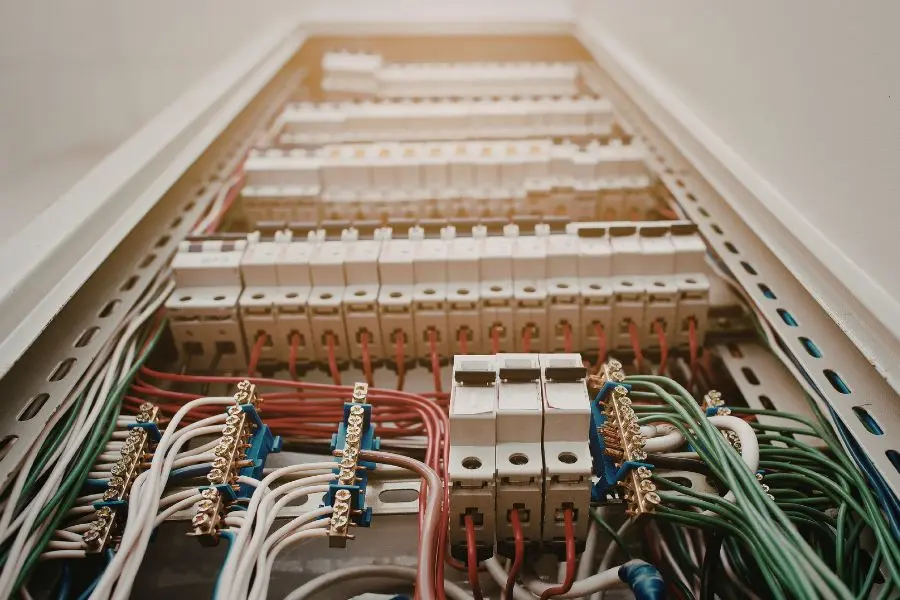
If violations turn up, a licensed electrician will tell you which ones carry immediate electrical safety risk and which can be scheduled. Not every finding needs to be resolved tomorrow. Knowing the difference gives you options.
Frequently Asked Questions About Commercial Electrical Code Compliance in Salem, Oregon
Does my Salem commercial building have to meet today’s electrical codes if nothing has been changed?
Generally no. Oregon law protects existing wiring that met the building code and electrical codes in effect when it was installed. That protection holds as long as the building’s use and occupancy haven’t changed and no alterations have been made to the electrical systems.
Do all commercial electrical jobs in Salem require a permit?
Yes. Every electrical installation in a commercial building in Oregon requires a permit, and only a licensed electrician with the proper Oregon contractor credentials can obtain one. There is no scope threshold below which commercial work is exempt.
What is the Oregon Electrical Specialty Code and how does it relate to the NEC?
The Oregon Electrical Specialty Code is Oregon’s adopted version of the National Electrical Code, modified with state-specific amendments. Those amendments address seismic zone requirements, wet climate conditions for outdoor electrical installation, and enhanced energy efficiency standards. The current OESC is based on the 2023 NEC.
What happens if unpermitted electrical work is discovered during a Salem commercial property sale?
Unpermitted work typically surfaces during a buyer’s inspection or title review. It becomes a price negotiation issue, a closing condition, or a deal-stopper depending on scope. Resolving it requires retroactive permits, City of Salem inspections, and in some cases opening walls or ceilings to verify what was installed.
How often should Salem commercial buildings have their electrical systems inspected?
There is no fixed state requirement for routine inspections of commercial buildings that are not undergoing renovation or changing occupancy. Most licensed electricians recommend a full inspection every three to five years, or any time new equipment is added, a new tenant takes occupancy, the building changes ownership, or an insurance renewal raises questions about electrical code compliance.
Are power strips and extension cords acceptable as permanent wiring in a Salem commercial building?
No. Extension cords and power strips are rated for temporary use only. Using them as a substitute for permanent electrical installation violates Oregon electrical codes and NEC standards. It also creates overloaded circuits — one of the most common code violations our commercial electricians find in Salem buildings.
Schedule a Commercial Electrical Inspection With Photo Electric
If you are not certain your Salem commercial building’s wiring meets current electrical codes, do not wait for someone else to raise the question on their timeline. Photo Electric’s licensed commercial electricians in Salem, Oregon will inspect your electrical systems, identify code violations, and give you a clear, honest picture of what needs attention. Contact us today to schedule your commercial electrical inspection.
Sources
Oregon Secretary of State Administrative Rules, OAR 918-260, Existing Building Wiring Compliance Standards. Oregon Building Codes Division, 2023 Oregon Electrical Specialty Code Adoption, effective October 1, 2023. Oregon Building Codes Division, BCD 13-2024 and BCD 17-2025 Amendments to the Oregon Electrical Specialty Code, effective January 1, 2025 and January 1, 2026. Oregon Building Codes Division, 2025 Oregon Energy Efficiency Specialty Code, effective January 1, 2025, mandatory July 1, 2025. City of Salem, Oregon, Permit Application Center, Building Permit Applications and Forms, cityofsalem.net. City of Salem, Oregon, Request a Building Inspection, cityofsalem.net. National Electrical Code (NEC) 2023, NFPA 70, National Fire Protection Association. Oregon Building Codes Division, Electrical Code Program Overview, oregon.gov/bcd.