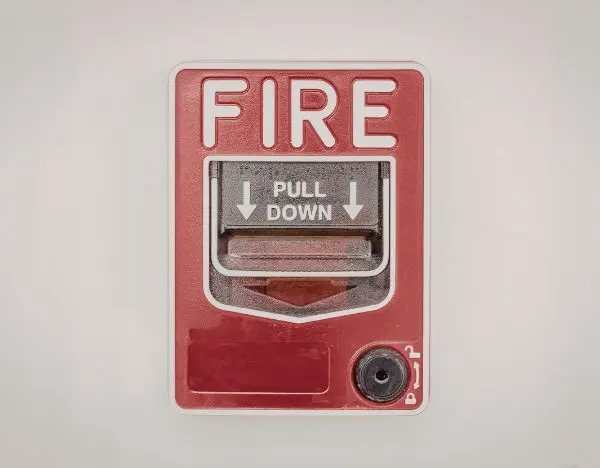
Is Your Commercial Fire Alarm Ready for the Dry Season?
Probably not without a walk-through. A commercial fire alarm system on a Mid Valley building going into the 2026 dry season is ready when the panel firmware is current, the battery backup is documented and tested, the devices have been inspected on a defined cycle, the documentation is in order, and the coordination with the fire alarm specialty contractor and the local fire marshal is up to date. Few buildings hit all of those without a planned readiness pass.
Commercial fire alarm readiness is the conversation our project team has with Salem area property managers, facility teams, and building owners every spring. The system has been running on the same battery backup for years. The insurance carrier sent the renewal questionnaire and asked about the alarm. The fire marshal’s last visit produced a punch list that has been sitting on the desk. The dry season is here.
This post covers what “ready” actually means for a commercial fire alarm system by concept. It covers what gets checked during the readiness pass. It covers the coordination with the fire alarm specialty contractor and the local fire marshal. It covers what our project team does on the electrical side of a commercial fire alarm readiness scope.
What Does Commercial Fire Alarm Readiness Actually Mean on a Mid Valley Commercial Building?
Commercial fire alarm readiness by concept covers the panel and its power supply, the battery backup and its documentation, the initiating devices and notification appliances throughout the building, the wiring and the survivability requirements that apply to it by concept, the addressable programming if the system is addressable, the testing records, the inspector sign-offs, and the coordination with the local fire marshal and the property’s insurance carrier.
The system is ready when each of those pieces is current, documented, and operating as the design intent and the rules by concept require.
A system that has been running quietly for years is not the same as a system that is ready. A quiet system is a system that has not been asked to perform recently. Whether it can perform when asked is a question only the readiness pass answers.
What Gets Checked During a Commercial Fire Alarm Readiness Pass on a Salem Area Building?
The pass touches every category of the system.
- The panel and power supply: The main power feed, the supervised disconnects, and the breaker dedicated to the panel get verified. The panel firmware version gets checked against the current manufacturer release. The trouble history and the alarm history get pulled and reviewed.
- The battery backup: Backup batteries have a service life. The voltage gets read under load. The amp-hour rating gets verified against the design. Batteries past their service life or showing voltage drop under load get replaced.
- The initiating devices: Smoke detectors, heat detectors, duct detectors, manual pull stations, and any specialty initiating devices get tested per the cycle required by the rules by concept. Devices past their service life get replaced.
- The notification appliances: Horns, strobes, and speakers get tested for operation, audibility, and visibility. The notification arrangement gets verified against the building’s current layout, which is a check that catches buildings that have changed since the system was first installed.
- The wiring and the supervisory loop: The wiring gets visually inspected where access allows. Survivability where the rules require it by concept gets verified. The supervisory loop gets tested for trouble signals on open and short conditions.
- The records: The maintenance log, the test records, the inspector sign-offs, and the documentation the local fire marshal and the insurance carrier may ask for get reviewed and updated.
A pass that finds nothing is still valuable. A pass that finds something is the reason the pass exists.
How Does the Coordination With the Fire Alarm Specialty Contractor Work on a Commercial Building in Salem?
Commercial fire alarm work in Oregon involves a fire alarm specialty contractor whose scope covers the design, the programming, and the testing of the system itself. Our project team handles the electrical side of the install, which includes the dedicated power feed, the disconnects, the conduit and conductor routing where it falls in the electrical scope, the panel and device mounting where the rules by concept allow it, and the coordination with the rest of the building’s electrical infrastructure.
On a readiness pass, the coordination is simpler than it is during a new install. The fire alarm specialty contractor leads the testing and certification of the system. Our project team handles the electrical findings, the power supply issues, and any wiring concerns that surface during the pass.
The owner gets a clearer picture when both trades walk the building together. A finding that touches both scopes can be sorted out in one visit instead of two.
How Does the Insurance Carrier Renewal Questionnaire Affect a Salem Commercial Building’s Fire Alarm Readiness Conversation?
Property insurance carriers have been asking more pointed questions about fire alarm systems in recent renewal cycles, especially on Mid Valley commercial buildings going into a fire-season window. The renewal questionnaire often asks about the inspection cycle, the test records, the battery backup, the device service life, and the most recent fire marshal sign-off.
When the carrier asks, the answer needs to be in writing and current. A property manager who does not have documented test records for the system’s most recent cycle is a property manager who is going to be answering the same question again at the next renewal, and the conversation gets harder each time.
The readiness pass produces the documentation the carrier asks for. The cost of the pass is rarely the deciding factor in the renewal, but the lack of documentation often is.
How Does Our Project Team Sequence a Commercial Fire Alarm Readiness Pass on a Salem Area Building Before the Dry Season?
The sequence starts with the walk-through. The walk covers the panel location, the device locations, the wiring routing where it is accessible, and the records the building has on hand.
The pass itself gets scheduled with the fire alarm specialty contractor and our project team together. The building’s operations team gets the schedule in advance. Any testing that requires a building-wide notification gets coordinated with the operations side so the testing does not disrupt tenants or trigger an unintended evacuation.
The findings produce a punch list. Items that need attention on the electrical side get scoped by our project team. Items on the fire alarm system side get scoped by the specialty contractor. The owner sees one consolidated picture instead of two competing reports.
The work that comes out of the pass gets scheduled in the order the findings demand. Critical safety issues come first. Code-correction issues by concept follow. Documentation cleanup gets handled in the same window. The final documentation package goes to the owner and, when the building’s process requires it, to the local fire marshal and the insurance carrier.
Commercial Fire Alarm Readiness FAQs
How Often Should a Commercial Fire Alarm Readiness Pass Happen on Our Salem Area Building?
A common practice is at least once a year, with additional testing on a defined cycle for specific device types and for the battery backup. The exact frequency depends on the system size, the building’s occupancy classification, the insurance carrier’s requirements, and the local fire marshal’s expectations. The shorter answer is that a building going into a severe fire season without a readiness pass in the last twelve months is a building with unknown system condition.
Can the Readiness Pass Happen Without Shutting Down the Building or the Tenants?
Mostly yes, with the right coordination. The testing that requires a brief building-wide notification gets scheduled around tenant operations. The bulk of the pass happens without any operational impact. A small number of tests do require coordination with the operations team, and the schedule reflects that.
Does the Local Fire Marshal Need to Be Involved in the Readiness Pass?
Not always, but sometimes. The local fire marshal’s involvement depends on the building, the system, the inspection cycle by concept, and any open punch-list items from prior inspections. Our project team and the fire alarm specialty contractor flag the trigger when the readiness pass surfaces something the fire marshal will want to see.
Will the Insurance Carrier Reduce Our Premium if We Produce Readiness Documentation?
We are not the right party to predict a carrier’s underwriting decision. The decision belongs to the carrier. The documentation gives the carrier what it asks for, and a clean documentation package is rarely the reason a premium goes up at renewal.
Can Photo Electric Coordinate the Whole Readiness Pass for Our Mid Valley Commercial Building?
Yes, on the electrical side, with the fire alarm specialty contractor handling the system side. Our project team manages the schedule, the documentation, and the coordination with the operations team. The owner gets one electrical point of contact and one consolidated punch list at the end.
Schedule the Commercial Fire Alarm Readiness Pass Before the Dry Season Tightens the Calendar
Photo Electric works with Mid Valley commercial property managers, facility teams, and building owners on the electrical side of fire alarm readiness every spring. The pass is short. The documentation it produces is the part that matters at renewal and at the next inspection.
Call us before the smoke arrives and the calendar disappears.